Ground Guide signals are vital for clear communication, especially when verbal commands are impractical. These standardized signals, detailed in TC 3-21.60 and FM 21-60, ensure effective coordination.
Historical Context of Visual Communication in the Military
Throughout military history, effective communication has been paramount, evolving alongside technology. Before radios and modern systems, armies relied heavily on visual signals – flags, torches, and codified hand movements. These methods were crucial for coordinating movements on chaotic battlefields, particularly when noise or distance hindered verbal orders.
The need for standardized signals became increasingly apparent as armies grew in size and complexity. Early forms of ground guide signals likely emerged from practical necessity, adapting to diverse terrains and tactical situations. Formalization began with the development of drill manuals and signal books, aiming to reduce ambiguity and ensure consistent interpretation across units.
The U.S; Army’s continued refinement of visual signals, documented in publications like FM 21-60 (1987) and TC 3-21.60, reflects a commitment to maintaining this essential communication method, even in the age of advanced technology. These signals remain relevant for scenarios where electronic communication is unavailable, compromised, or unsuitable.
Importance of Standardized Signals
Standardized ground guide signals are absolutely critical for maintaining operational effectiveness within the Army. Without a common understanding of these visual cues, miscommunication can lead to delays, errors, and potentially catastrophic consequences on the battlefield or during training exercises.
The Army’s emphasis on standardization, as evidenced by resources like TC 3-21.60, ensures that personnel from different units can seamlessly interact and coordinate actions. This is particularly vital in joint operations or when working with allied forces. Clear, concise signals minimize ambiguity and reduce the risk of friendly fire incidents.
Furthermore, standardized signals provide a reliable backup communication method when technology fails or is unavailable. They offer a discreet and secure means of conveying instructions, enhancing tactical flexibility and resilience. Consistent training and adherence to established protocols are essential for signal proficiency.

Types of Ground Guide Signals
Ground Guide signals encompass a range of methods: hand-and-arm movements, light signals for limited visibility, and flag signals for distinct, long-distance communication.
Hand-and-Arm Signals
Hand-and-arm signals represent the foundational method of ground guide communication, offering a direct and readily understood means of control. These signals, as outlined in FM 21-60, are particularly crucial when radio silence is required or equipment malfunctions occur. They are employed both dismounted (ground-to-ground or ground-to-vehicle) and mounted, adapting to various operational scenarios.
The effectiveness of these signals relies on precise execution and clear visibility. Signals are categorized by arrowhead indicators; single arrowheads denote intermittent repetition until acknowledged, while double arrowheads signify continuous repetition until action is taken. Proficiency in these signals is paramount for maintaining unit cohesion and operational tempo, demanding consistent training and practical exercises to ensure accurate interpretation and execution by all personnel.
Light Signals
Light signals provide a critical alternative to hand-and-arm signals, especially during periods of limited visibility – nighttime operations, inclement weather, or obscured terrain. These signals utilize various light sources and patterns to convey instructions, mirroring the functionality of their hand-and-arm counterparts. They are often employed for vehicle guidance and communication over greater distances than is practical with solely arm movements.
Like hand signals, light signals adhere to the arrowhead repetition system detailed in FM 21-60, indicating whether a signal is continuous or intermittent. Proper training emphasizes the correct interpretation of flash patterns and colors to avoid miscommunication. Effective implementation requires careful consideration of background illumination and potential interference to ensure signal clarity and prevent ambiguity, maintaining operational effectiveness.
Flag Signals
Flag signals, while less frequently utilized than hand-and-arm or light signals in modern ground operations, remain a valuable component of the Army’s visual communication toolkit. Historically, and in specific scenarios like airfield operations or designated landing zones, flags offer a distinct and easily recognizable method for conveying instructions. Their visibility, even in moderate wind conditions, makes them suitable for situations where other signals might be compromised.
The specific colors and patterns of the flags themselves carry pre-defined meanings, standardized within Army regulations. Proper training focuses on the accurate identification of these flag configurations and their corresponding commands. While documentation like TC 3-21.60 primarily emphasizes other signal types, understanding flag signals ensures comprehensive communication capabilities and adaptability across diverse operational environments.
Basic Ground Guide Signals ⎯ Movement
Movement signals, like “Halt,” “Advance,” and turning indicators, are fundamental for directing personnel and vehicles; These hand-and-arm signals ensure coordinated maneuvers.
“Halt” Signal
The “Halt” signal is arguably the most critical in ground guide communication, demanding immediate cessation of movement. Executed by extending one arm vertically upwards, palm facing forward, it’s a universally recognized directive. This signal, detailed within FM 21-60, must be displayed with authority and clarity to prevent collisions or misinterpretations.
Effective execution requires maintaining the arm’s position until acknowledged. The signal’s simplicity belies its importance; a delayed or unclear “Halt” can have severe consequences. Ground guides must practice consistent application, ensuring the signal is visible even in challenging conditions. Acknowledgement is crucial – a raised hand or verbal confirmation from the receiver verifies understanding and compliance. Continuous repetition may be necessary until acknowledged, particularly over distance or in noisy environments.
“Advance” Signal
The “Advance” signal instructs movement forward, a fundamental command in ground guide operations. This is typically conveyed by sweeping the arm forward in a circular motion, palm down, originating from a position near the shoulder. As outlined in Army visual signals guides like TC 3-21.60, clarity is paramount; the motion must be deliberate and easily visible to all intended recipients.
Ground guides should ensure the signal is maintained until the unit begins to move, or until superseded by another directive. The speed of the circular motion can subtly indicate desired pace – a faster sweep suggests a quicker advance. Confirmation from the receiving unit, through a raised hand or verbal acknowledgement, is essential to verify understanding. Repetition, particularly with a single arrowhead indication, may be needed until the advance is initiated and sustained.
“Turn” Signals (Left, Right, About Face)
Turning signals are crucial for maneuvering units effectively. A left turn is indicated by extending the left arm horizontally, palm down, and rotating the hand clockwise. Conversely, a right turn employs the right arm, extended horizontally, palm down, rotating counter-clockwise; These signals, detailed in FM 21-60, must be executed with precision to avoid misinterpretation.
The “About Face” signal involves forming a fist with one hand and rotating it 180 degrees, bringing it down to the rear. Like all ground guide signals, these turning commands require clear visibility and acknowledgement. Continuous repetition, signified by double arrowheads, may be necessary in noisy or obscured environments. Ground guides must confirm understanding before initiating the maneuver, ensuring unit cohesion and preventing collisions.
“Follow Me” Signal
The “Follow Me” signal is a fundamental command for guiding personnel or vehicles. It’s executed by extending one arm upwards at a 45-degree angle, palm facing forward, and making a beckoning motion with the hand. This signal, outlined in Army visual signals guides like TC 3-21.60, clearly indicates the intended path and requires attentive followers.
Effective execution demands sustained visibility and a deliberate, repeating motion, especially over distance. The ground guide must maintain the signal until the following element acknowledges or begins to track. Intermittent use, indicated by a single arrowhead in FM 21-60, is appropriate when acknowledgement is received. Clear communication prevents separation and maintains operational control during movement, vital for mission success.
Advanced Ground Guide Signals ⎯ Vehicle Control
Advanced signals manage vehicle movement with precision, covering speed, distance, and obstacle warnings. These techniques, detailed in TC 3-21.60, enhance safety and coordination.
Speed Control Signals (Slow, Faster)
Speed control is paramount for safe vehicle operation, and ground guide signals provide a clear method for adjustment. To signal “Slow,” raise your open palm towards the vehicle, moving it up and down repeatedly. This universally understood gesture instructs the driver to reduce their current speed, preventing potential hazards or maintaining formation integrity.
Conversely, to signal “Faster,” extend your arm forward with an open palm facing upwards, then make a circular motion. This indicates the driver can increase speed, but must remain aware of surrounding conditions and maintain control. Consistent application of these signals, as outlined in FM 21-60, ensures predictable vehicle movement and minimizes the risk of accidents during maneuvers or convoy operations. Proper execution and clear visibility are crucial for effective communication.
Distance Signals (Close Up, Further Back)
Maintaining appropriate spacing between vehicles is critical for maneuverability and safety, and ground guides utilize specific signals to adjust distance. To signal “Close Up,” extend both arms parallel to the ground, palms facing upwards, then move them upwards and inwards towards the head – a distinct gesture detailed in Chapter 2 of InfantryDrills.com resources.
This instructs following vehicles to reduce the gap and maintain closer proximity. Conversely, to signal “Further Back,” extend one arm outwards, palm facing the following vehicle, and make a pushing motion away from the body. This indicates a need for increased distance, preventing collisions or bunching during movement. Consistent use of these signals, as referenced in TC 3-21.60, ensures controlled spacing and enhances overall convoy safety.
Obstacle Warning Signals
Ground guides employ crucial signals to alert vehicle operators to potential hazards along the route, prioritizing safety and preventing damage. While specific signals aren’t detailed in the provided excerpts, the principle of clear warning is paramount, aligning with the standardization goals of TC 3-21.60. A common technique involves pointing directly at the obstacle – be it a ditch, low-hanging wire, or debris – while simultaneously using a “halt” signal to stop the vehicle.
Alternatively, a sweeping arm motion can indicate the general direction of the hazard. These signals must be executed decisively and repeatedly until acknowledged, utilizing either single or double arrowhead repetition as outlined in FM 21-60. Effective obstacle warning relies on the guide’s vigilance and the driver’s prompt response, ensuring a safe passage for all vehicles.
Directional Signals (Specific Heading)
Guiding vehicles towards precise headings demands clear and unambiguous directional signals from ground guides. While the provided texts don’t detail specific signals for exact headings, the foundational principles of visual communication apply. Typically, a guide will extend an arm in the desired direction of travel, maintaining a consistent and visible posture. This signal is often combined with a forward-pointing gesture to reinforce the intended path.
To indicate a slight adjustment, a smaller arm movement suffices. For more significant changes in direction, a broader, more deliberate sweep is necessary. Consistent repetition, utilizing double arrowhead signals from FM 21-60, ensures the driver understands and maintains the correct course. Clear visibility and acknowledgement are crucial for successful directional guidance.
Signal Repetition and Acknowledgement
Army signals use single or double arrowheads to indicate repetition frequency; single signals are intermittent, while double signals are continuous until acknowledged.
Single Arrowhead Signals ⎯ Intermittent Use
Ground Guide signals illustrated with a single arrowhead are not intended for continuous repetition. Instead, these signals are transmitted at intervals, allowing for a pause between each instance. This intermittent nature implies that the signal will be repeated as needed, but not relentlessly.
The operator transmitting the signal maintains awareness and observes for acknowledgement from the receiver. If the desired action isn’t executed or confirmation isn’t received, the signal is repeated. This process continues until the intended outcome is achieved or a clear understanding is established.
Essentially, a single arrowhead signifies a “check-in” type signal – a prompt to initiate action, followed by observation for response. It’s a dynamic approach, adapting to the situation and ensuring effective communication without unnecessary redundancy.
Double Arrowhead Signals ⎯ Continuous Use
Ground Guide signals denoted by double arrowheads demand consistent and uninterrupted transmission. Unlike their single arrowhead counterparts, these signals are repeated continuously until explicitly acknowledged by the receiver or the required action is demonstrably completed. This relentless repetition ensures the message isn’t missed amidst noise or distraction.
The sender maintains the signal’s delivery without pause, actively conveying urgency or the necessity of immediate and sustained attention. This continuous nature is crucial for commands requiring ongoing execution, like maintaining a specific speed or direction.
Essentially, double arrowheads signify a persistent directive – a command that remains in effect until positively confirmed or the situation changes, guaranteeing clarity and preventing misinterpretation on the battlefield.
Acknowledgement Procedures
Ground Guide signal acknowledgement is paramount for effective communication. Once a signal – whether single or double arrowhead – is received, the receiver must demonstrate understanding. This is typically achieved through a distinct, pre-defined action, confirming the message was clearly perceived.
Common acknowledgement methods include a crisp salute, a raised hand, or repeating the signal back to the sender. The specific procedure should be established beforehand to avoid ambiguity. Failure to acknowledge leaves the sender uncertain if the command was understood, potentially leading to critical errors.
Prompt acknowledgement closes the communication loop, ensuring synchronized action and minimizing the risk of miscommunication during operations. Consistent adherence to these procedures is vital for maintaining unit cohesion and operational success.
Training and Resources
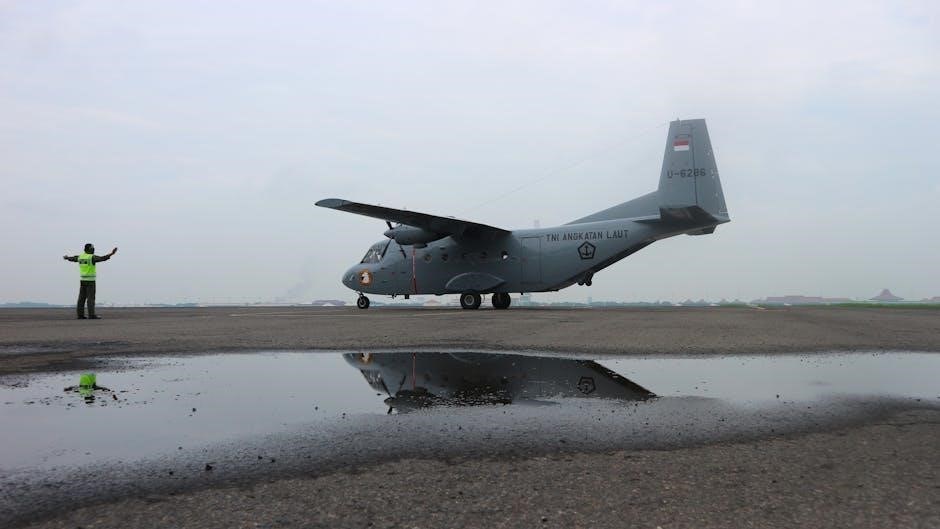
Army proficiency in ground guide signals relies on resources like TC 3-21.60 and FM 21-60, alongside consistent practical exercises for effective implementation.
TC 3-21.60: The Army’s Visual Signals Guide
Training Circular (TC) 3-21.60 serves as the definitive Army resource for standardizing visual signals, functioning as a crucial training reference for all personnel. It’s designed to promote consistent communication across units and during diverse operations. However, it’s important to recognize that this TC doesn’t encompass every visual signal utilized within the Army.
Instead, it focuses on the most commonly employed signals, providing detailed illustrations and explanations to ensure clarity and proper execution. The guide emphasizes the importance of understanding not only what a signal means, but also how to deliver it accurately and efficiently. This standardization minimizes misinterpretation and enhances overall operational effectiveness, particularly in scenarios where radio silence is required or environmental conditions hinder verbal communication. It’s a foundational document for mastering ground guide signals.
FM 21-60: Visual Signals Reference
FM 21-60, published in September 1987, provides a comprehensive reference for visual signals used by ground forces, including detailed illustrations of arm-and-hand signals. A key distinction outlined in this manual concerns signal repetition: signals accompanied by a single arrowhead are not continuously repeated, but may be reiterated at intervals until acknowledged or the action is completed.
Conversely, signals depicted with double arrowheads are repeated continuously until acknowledgement is received or the desired action is taken. This distinction is crucial for ensuring clear and unambiguous communication. FM 21-60 serves as a foundational document for understanding the nuances of signal delivery and interpretation, emphasizing the importance of disciplined execution to avoid confusion and maintain operational effectiveness during training and real-world scenarios. It’s a vital resource for ground guide signal proficiency.
Practical Exercises for Signal Proficiency
Developing proficiency in ground guide signals requires consistent, practical application. Exercises should begin with simple signal recognition – identifying “halt,” “advance,” and basic turn signals from various distances and angles. Progress to scenarios involving vehicle control, practicing speed adjustments (“slow,” “faster”) and distance commands (“close up,” “further back”).
Introduce obstacle warning signals and directional guidance, emphasizing clear, concise execution. Drills should incorporate both daytime and low-light conditions to simulate realistic operational environments. Regularly assess signal clarity and acknowledgement procedures. Furthermore, incorporate exercises where individuals must transmit and interpret signals while under simulated stress, enhancing their ability to maintain discipline and accuracy. Consistent practice, guided by resources like TC 3-21.60, is key to mastering these vital communication skills.
Challenges and Considerations
Ground guide signal effectiveness hinges on visibility, environmental factors, and clear interpretation; maintaining signal discipline is crucial for preventing miscommunication and ensuring safety.
Visibility and Environmental Factors
Ground guide signals are profoundly impacted by environmental conditions. Reduced visibility – due to fog, rain, smoke, or darkness – significantly hinders signal recognition, demanding increased signal size and repetition. Terrain features, like dense foliage or uneven ground, can obstruct the line of sight, necessitating careful positioning of both the guide and the intended recipient.
Furthermore, ambient light plays a critical role; signals must contrast sufficiently with the background to be discernible. Dust and sandstorms present unique challenges, obscuring signals and reducing clarity. Commanders must account for these factors during planning and training, implementing contingency procedures and emphasizing the importance of clear, deliberate signal execution to mitigate risks associated with adverse conditions. Proper assessment of the environment is paramount for successful communication.
Signal Clarity and Interpretation
Ground guide signal effectiveness hinges on unambiguous clarity and accurate interpretation. Signals must be executed precisely, adhering to established standards outlined in TC 3-21.60 and FM 21-60, to avoid miscommunication. Sloppy or rushed signals can lead to confusion and potentially dangerous errors; Personnel require thorough training to recognize and correctly respond to each signal, understanding subtle nuances in hand and arm movements.
Factors like distance, angle of view, and the recipient’s familiarity with the signals influence interpretation. Consistent signal repetition, particularly those indicated with double arrowheads, reinforces understanding. Acknowledgment procedures are crucial to confirm receipt and correct interpretation. Maintaining focus and minimizing distractions are essential for both the sender and receiver to ensure reliable communication during operations.
Maintaining Signal Discipline
Ground guide signal discipline is paramount for operational success and safety. Strict adherence to established protocols, detailed in TC 3-21.60 and FM 21-60, prevents ambiguity and ensures consistent communication. Unauthorized or improvised signals are strictly prohibited, as they introduce confusion and potential hazards. Personnel must practice precise execution and maintain situational awareness, adapting to changing environmental conditions.
Regular training reinforces proper technique and promotes a culture of disciplined signaling. Leaders are responsible for enforcing standards and correcting deviations. Clear acknowledgment procedures, utilizing single or double arrowhead signals, confirm understanding and maintain control. Consistent application of signal discipline minimizes errors, enhances coordination, and ultimately contributes to mission effectiveness in dynamic environments.